Creating and moving in units in Homelok
Overview
You must be a property manager or an owner to be able to create a unit. It's expected, although this will depend on your use case, that once you create a unit and, at least one unit manager, you would then hand over the management of the unit to a unit manager.
To create a unit, go to the Units section in the main navigation bar and follow these steps:
- Select Create and enter the name of the unit, for example "Apartment 3-B".
- Check the Unit privacy checkbox, if required. See the section on unit privacy for more details.
- Once created, navigate to the specific unit view within your installation.
If you have access to multiple units, these are listed when you select the Units section on the main navigation bar.
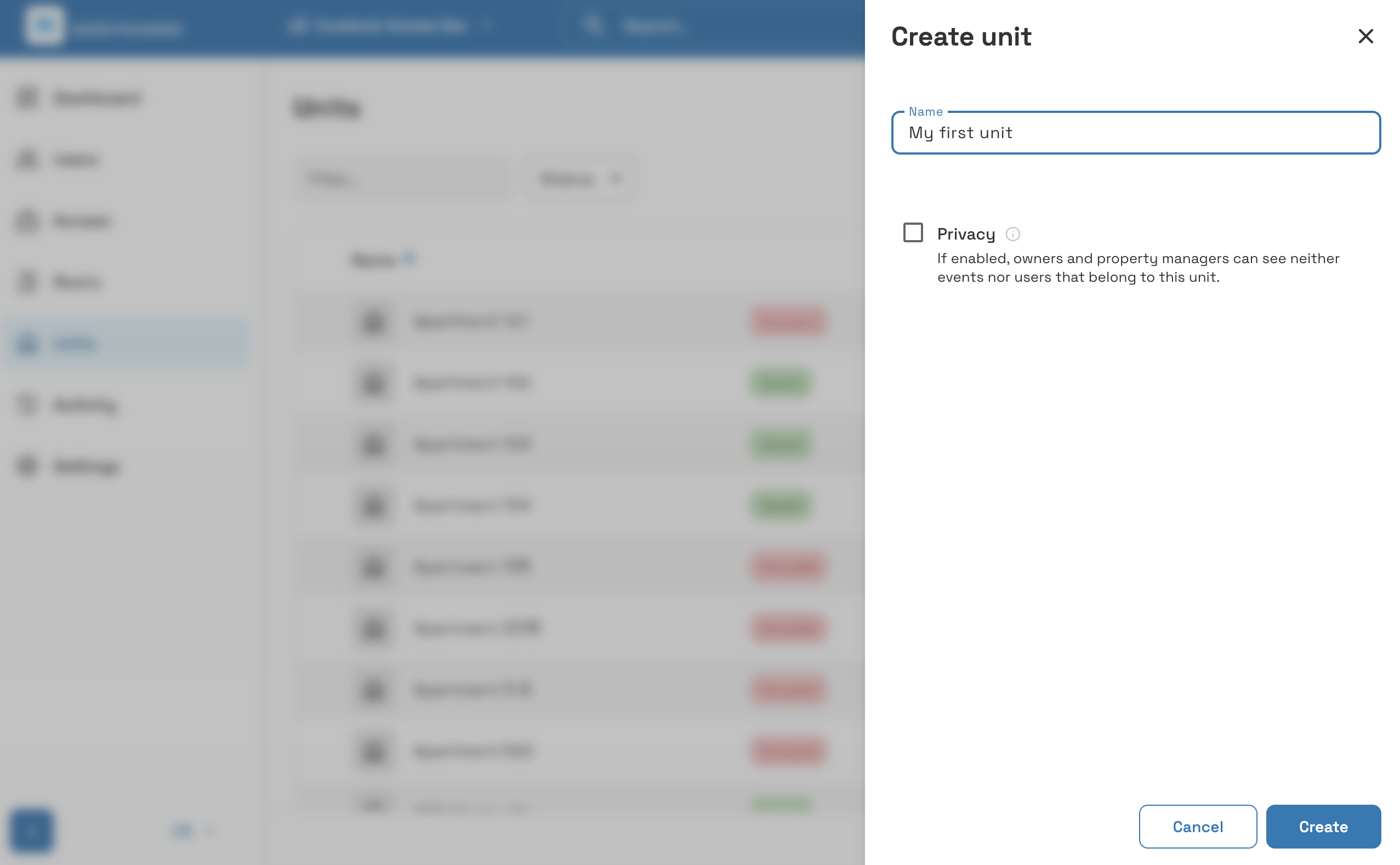 Creating a unit in Salto Homelok
Creating unit access
Before you can move in a unit and add unit users, you first need to create the unit access that you want to assign to them.
To create unit access, you can go to the Access tab of the specific unit or use the Create access option from the main unit list view.
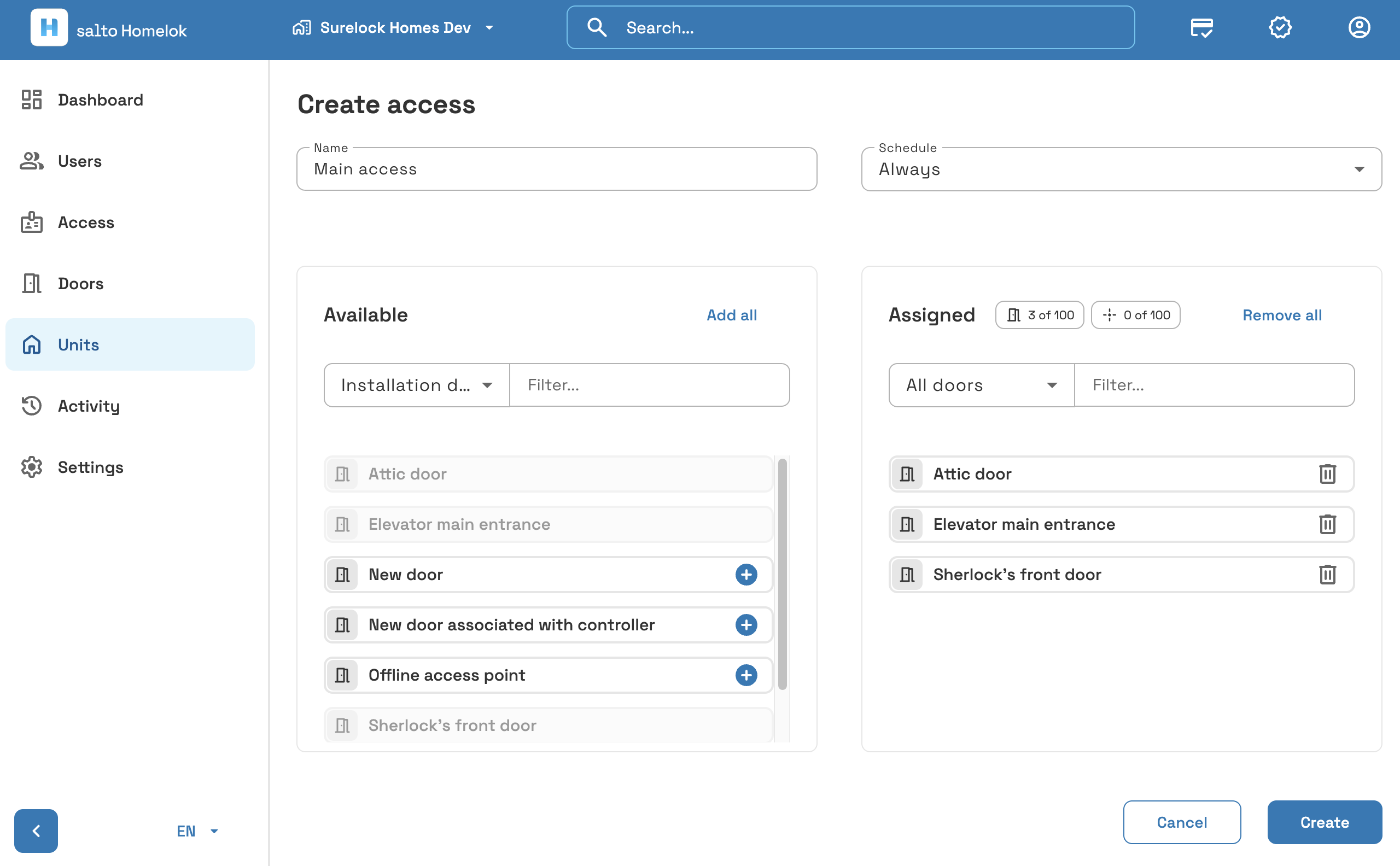 You can assign both installation doors and unit doors to a unit access
This process is similar to creating access at the installation level and the list of doors is split into installation doors and unit doors and destinations or door groups, if those are enabled.
This means you can separate out access into two main types:
- Access that relates to communal doors
- Access that is unit-specific
This allows the unit manager granular control when it comes to giving access to unit users.
Access schedules
At the unit level, schedules can only be the same or more restrictive than those assigned by a property manager to the unit. For example: if the tenant of the apartment (a unit manager) has only been given access to the swimming pool from 8 AM to 8 PM, the tenant cannot invite other users to the swimming pool 24 hours a day.
You can only apply one schedule per user access in a unit.
Moving in units
Once you've created the unit and at least one unit access, you can move in users.
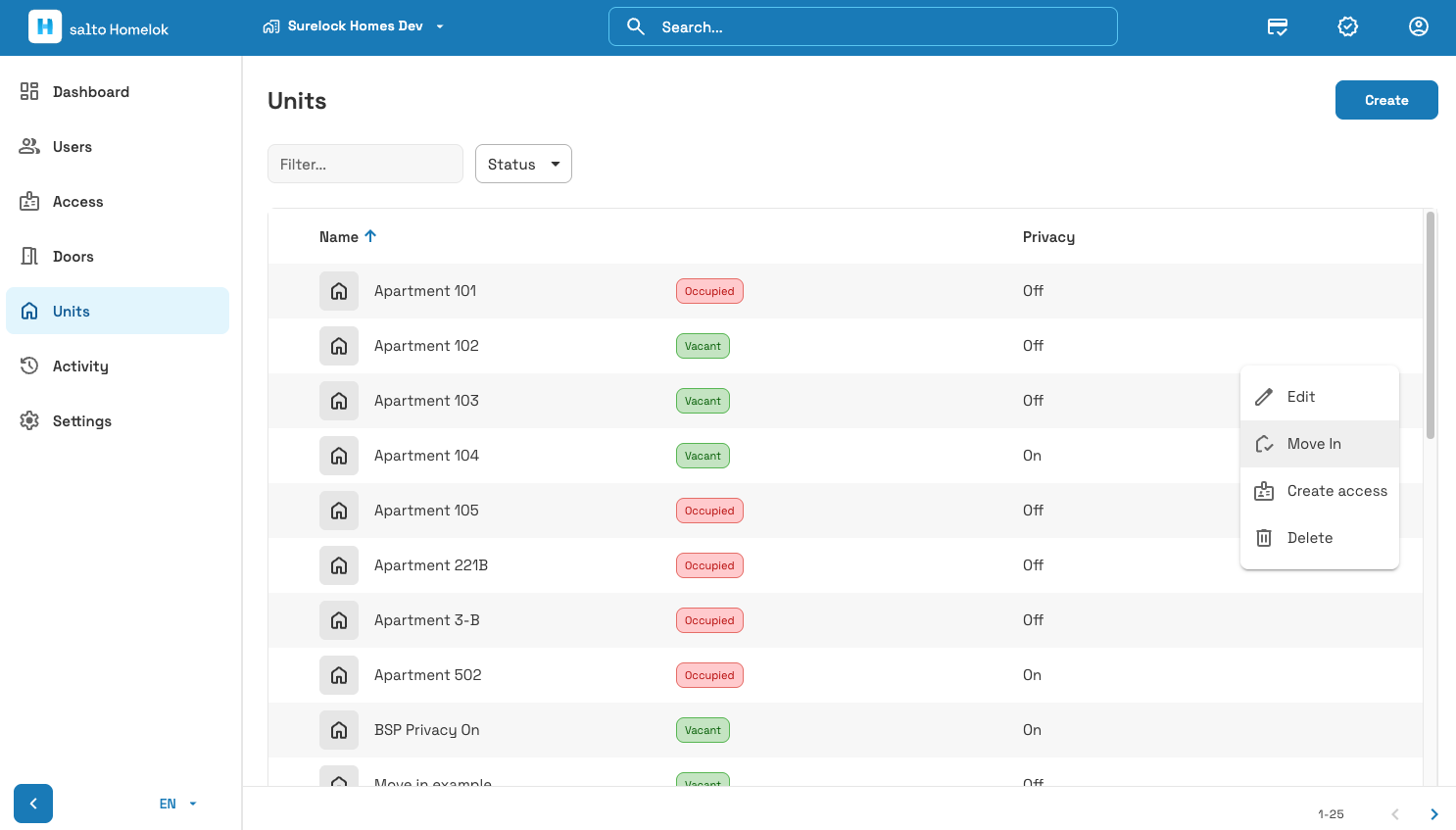 You can move in a unit directly from the unit list view, or from the main unit view
You cannot add users to a newly-created unit until you move in that unit using the Move in button, which requires at least one unit access to already exist.
You can only move in a maximum of 10 users.
Unit status
Units can have the following statuses:
- Vacant: This status is displayed on units that have not been moved in. That's to say, no users or keys belong to the unit.
- Occupied: This status means that users have been added to the unit.
Units can also either have the Unit privacy feature turned on or off. See the section on unit privacy for more details.
Creating unit users
You can create unit users in two different ways:
- By moving in the unit. In vacant units this is the only way to create users.
- By creating users in an occupied unit that has already been moved in. This is similar to creating users at the installation level.
The Move in functionality allows you to add multiple users to your unit at the same time. It consists of two steps:
- Add users to the unit.
- Assign previously created access to those users.
Step 1
Click on the Move in button either on the list view or inside the unit itself to begin the process. When the step 1 screen displays, use the Add user button to add users to the unit.
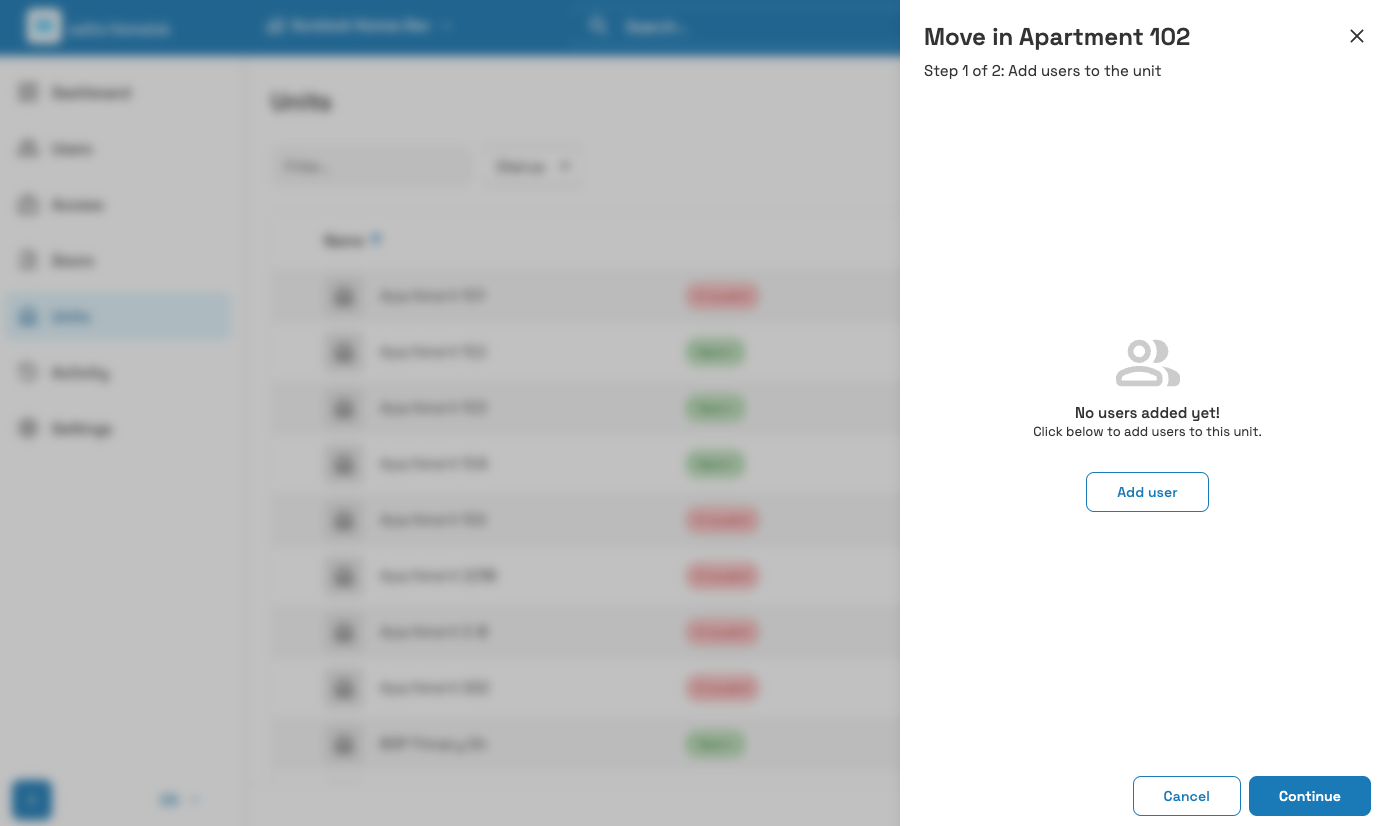 Step 1: add multiple users to the unit using the 'Move in' functionality
You can also add multiple users at once using the Save and add another option. Click Continue to proceed to the next step once you've added all the users. Ensure that you also assign the correct user type to each user. You can also go back and adjust these settings if necessary.
Important unit user details
When creating a user at the unit level, you can define whether that user is a unit manager - in other words, whether they'll have admin permissions at the unit level. This is done by checking the Unit manager option in the User type section.
At the unit level there are two types of users:
- Unit manager: can manage elements of Homelok at the unit level. Email required. Note: there are two types of unit managers.
- Keyholder: user who only unlocks doors with a key. Email only required for app key users.
Managers at the unit level are always holders of keys.
In general, as a property manager, it's expected that you'd create at least one unit manager as well as access and access schedules at the unit level, although this may differ depending on your use case. Note that any access you create in the unit can include doors that are both communal (installation and unit level) as well as doors at just the unit level.
Once you've moved in a unit, and if that unit contains a unit manager, it's expected that you'd 'hand off' the unit to the unit manager so they can create other users that belong to their unit.
The unit manager has practically the same role at the unit level as that of a property manager at the installation level. However, bear in mind that there are two types of unit manager:
- Unit managers who can create other unit managers.
- Unit managers who cannot create other unit managers.
If you mark the checkbox Can also create other unit managers when creating a unit user, the unit manager will not only be able to create keyholders within the unit, but also other unit managers.
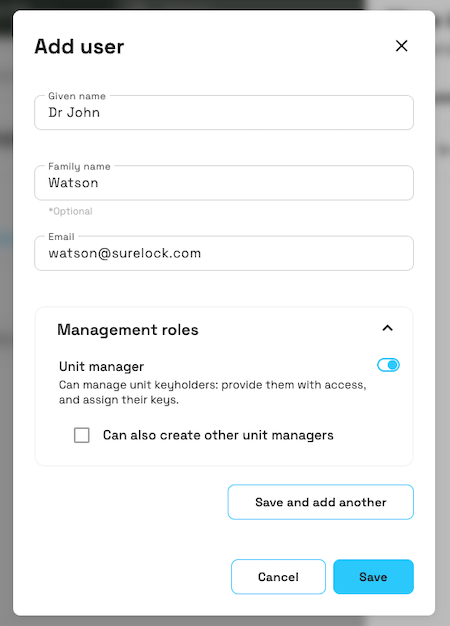 At the unit level, you can create users who are either unit managers or keyholders
In some situations, units may not have users with any management roles, for example, in managed apartments. For these cases, as a property manager, you have to manage the access and assignment of keys for these keyholders. You wouldn't 'hand off' the unit to a unit manager.
If you're a unit manager, see also the dedicated section on creating users intended only for unit managers.
When creating a unit user, you can also enable the Override do not disturb toggle. This toggle is disabled by default for new unit users in Homelok web. Unit users can only override do not disturb on their unit's doors. See the section on overriding do not disturb for more details.
Regardless of whether a user has already been created at the installation level, if you want that same user to also belong to a unit, you must also create them as a unit user.
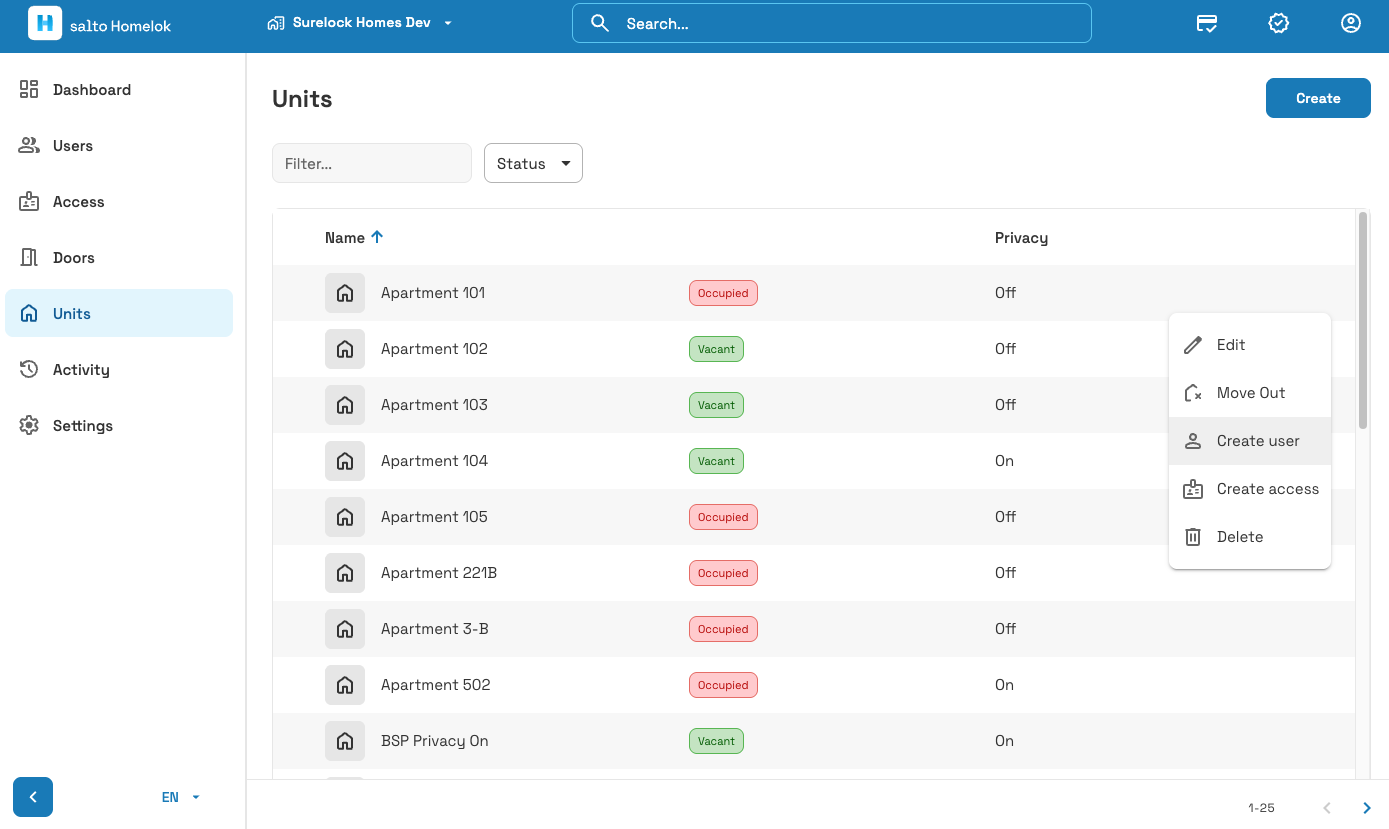 If a unit is already occupied, you can add more users to it using the 'New user' option
Step 2
On the second screen, you can assign previously created access to the users. This is done by selecting the access you want to assign from the Access assigned section.
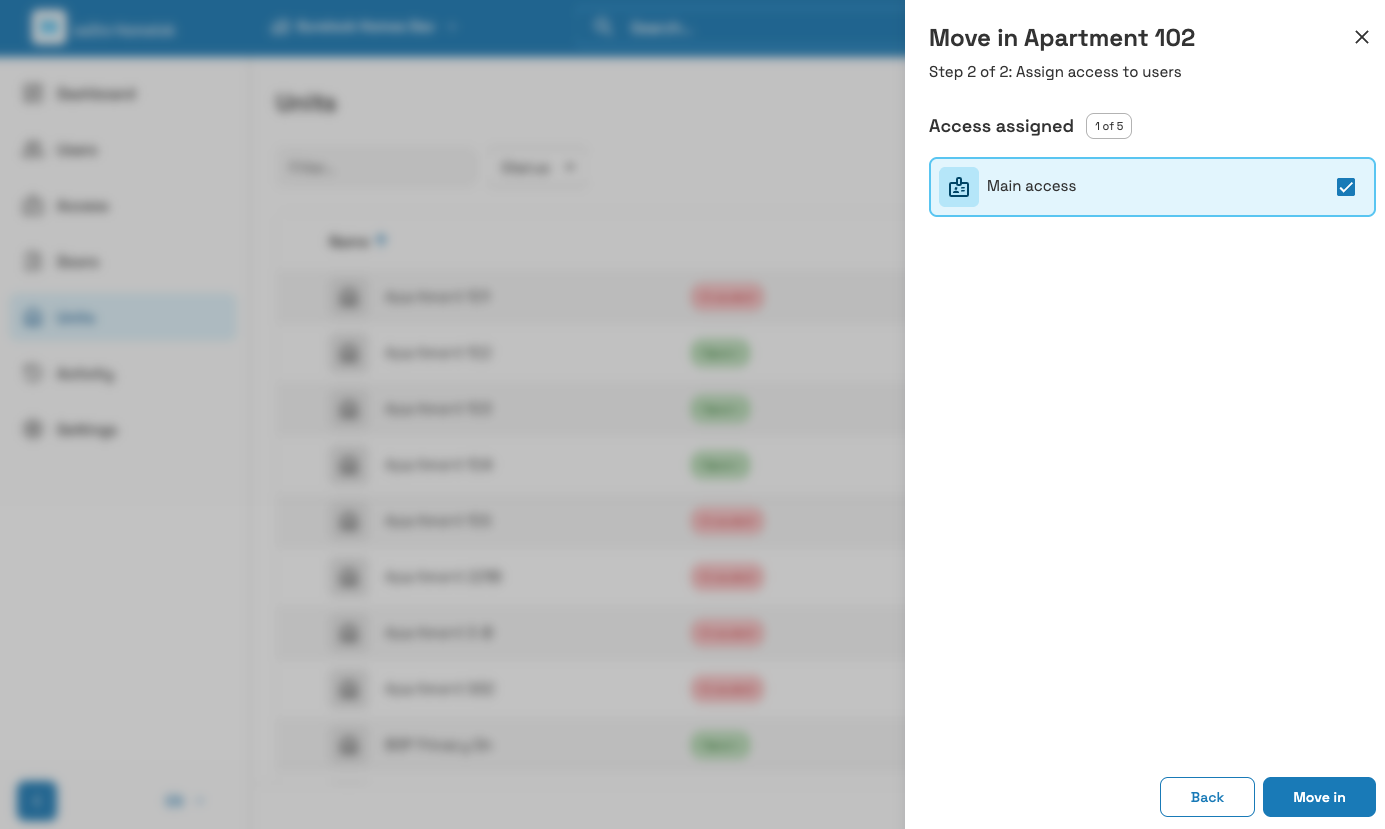 Step 2: assign previously created access to the users
This allows you to assign the same access to multiple users at the same time, as well as being able to define more granular access for groups of users.
Assigning user access
If you add a new user to a unit that's already been moved in, you can assign them access in a similar way as you would assign it within an installation. The access you see in the Available access list can be at both the installation and the unit level.
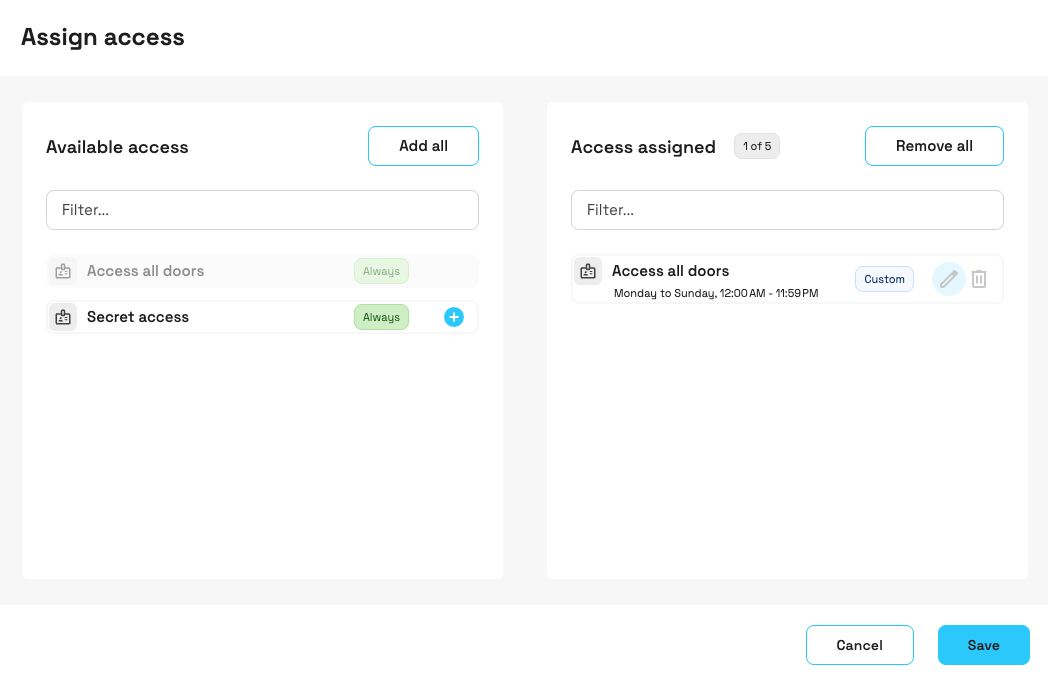 User access at the unit level can either be the same as an installation access, or more restrictive
Assigning keys
You assign keys to unit users in the same way as you assign keys at the installation level.
Doors and locks
Only users with management roles at the installation level (property managers, owners) can create and configure unit doors and their associated electronic locks.
A unit manager cannot create doors, electronic locks, or other devices.
To create a door at the unit level, follow the same process as you would for creating a door at the installation level, but use the Belongs to field to assign the door to the unit instead of the installation.
A door isn't functional until you associate it with a physical device. Once you've created the unit door, go to the Devices section to create and associate an electronic lock with it, in the same way you would for an installation door.
One of the main advantages of creating doors at the unit level is when it comes to moving out a unit. In this case, users can be removed and their keys invalidated, but the access and the associated doors that belong to the unit remain.
See also the section for installers on configuring devices using the Salto Nebula Commissioning app.
 Back
Introduction
Back
Introduction Moving out