Site Monitoring
The XS4 Face Console is available through modern desktop and mobile browsers, allowing system administrators to remotely monitor and maintain an XS4 Face Site.
When members are added to the team of a site in the XS4 Face Console, they receive an email with a link to the XS4 Face Console.
Accessing a site
Log in to the XS4 Face Console for the correct region. Enter the email address that received the invitation and click Continue:
Select the site from the drop-down menu in the top left.
The XS4 Face Console logs you out after 15 minutes without activity.
Server
With a site selected, click Servers in the left-hand pane to view all servers for that site. To add a server, click Add Server at the top of the page. For more information, see Server installation.
To find a server, enter its name or IP address in the Search by server name or IP address field. Use the toggle next to the search field to switch between the Cards and Table views. On desktop browsers, sites with more than 9 servers open in the Table view.
Cards view
Each server tile displays quick information about server status.
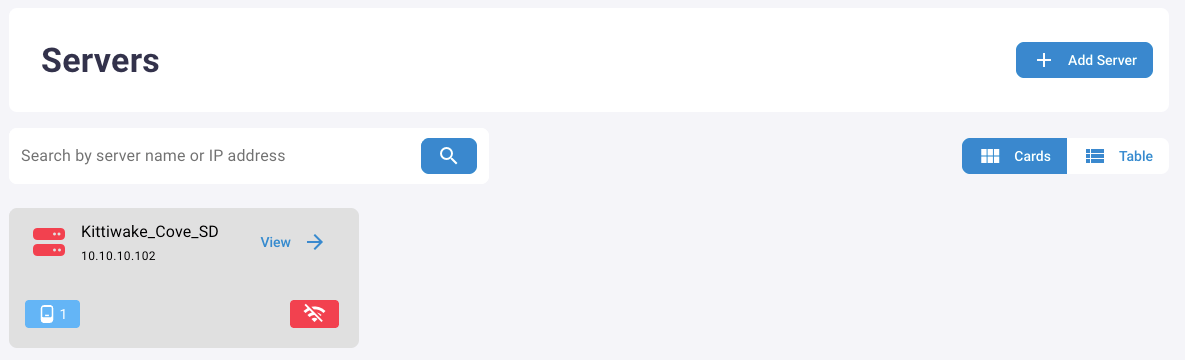
- The name and IP address of the server
- The number of XS4 Face Devices commissioned to the server
- The connection status of the server: Connected or Disconnected. Tiles for disconnected servers have a gray background.
Table view
The table shows one row for each server:
- Name: The name of the server
- IP Address (IPv4): The IP address of the server
- Devices: The number of XS4 Face Devices commissioned to the server
- Connection Status: Connected or Disconnected. To show only connected or disconnected servers, click Connection Status in the table header and select a filter.
Click a column header to sort the table.

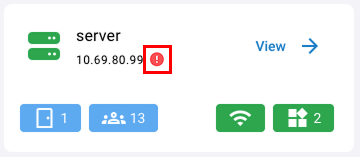
Server IP address
An indicator next to the IP address of the server will show if the server detects that its IP address is different from the one used when it was added to the console.
Server logging
To access the different logs for a server, click View on the server tile or table row and select the Event Logs, Pending Messages or Server Logs tab.
Event logs
These logs are a record of events sent from the XS4 Face Server to XS4 Face Connect and can be found on the Event Logs tab.
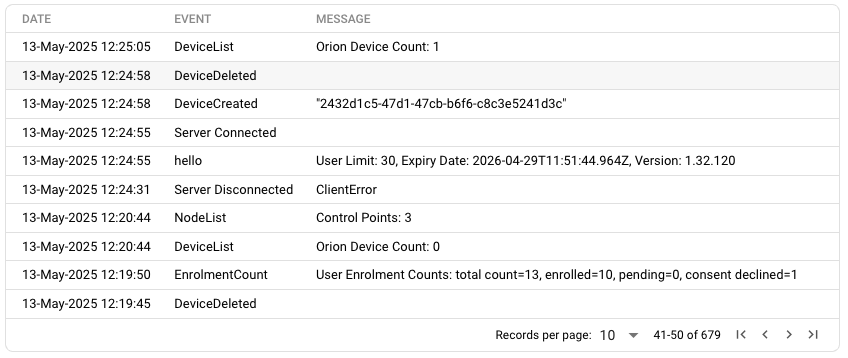
- Date: The date and time the event was received
- Event: A unique identifier for the type of event
- Message: Details on the event.
Pending messages
These logs are a record of events sent by XS4 Face Connect which have not yet been received by the XS4 Face Server. Events which remain in this list for a long time may indicate an issue with the servers connection to XS4 Face Connect.
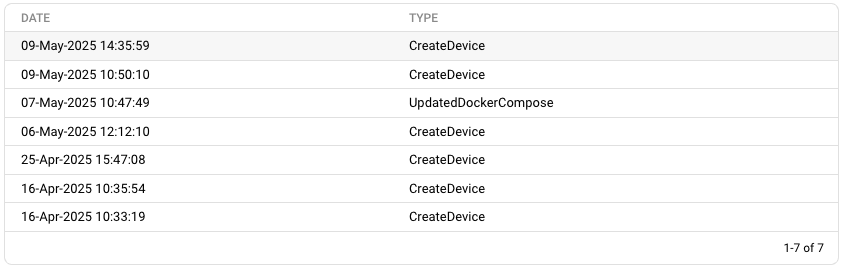
- Date: The date and time the event was sent
- Type: A unique identifier for the type of event
Server Logs
Beta
The Server Logs tab shows the logs of the software services that run on the XS4 Face Server. Use these logs to diagnose problems with the server.
- Server Containers: Select one or more services to show logs for.
- Log Level: Select the log levels to show. Hover over a level and click Only to show that level only.
- Time range: Select a range such as Past 15 Minutes or Past 7 Days, or select Custom Range and enter the From and To dates.
- Search for keyword: Show only the log entries that contain a keyword.
- Live: Show new log entries as the server writes them.
Each log entry shows the Time, the Service and the Content of the entry.
The XS4 Face Console reads the logs from the server while you view them. If the server isn't connected, the tab shows Waiting for server information….
Devices
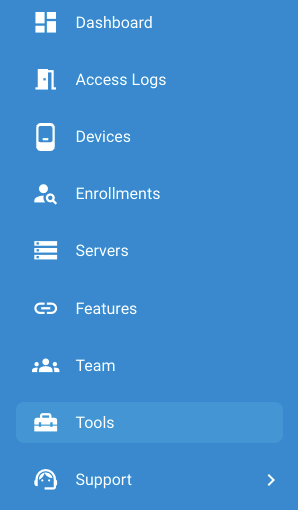
With a site selected, XS4 Face Devices for that site can be viewed by clicking the Devices button in the left-hand pane.
XS4 Face Devices are filtered by their status:
- Ready: Alive and waiting for access attempts
- Fault: An error has occurred, or the device has not sent a message in a long time
- Pending:
- Commissioning: The XS4 Face Device has made first contact and is currently commissioning with the server
- Decommissioning: The XS4 Face Device disconnects from the server and is soon unregistered from this door

The filtered list of XS4 Face Devices show:
- MAC Address: The identifier for the device on the network
- Server: The name of the server to which the XS4 Face Device is commissioned. This column appears on the Devices page, not on the Devices tab of a server.
- Control Point: The name of the control point to which the XS4 Face Device is paired. If the device isn't paired, this column shows the Pair button.
- Version: The firmware version of the XS4 Face Device
- Status: The status of the XS4 Face Device
- The reason for a fault, shown next to the Status, or No Fault
- Actions: Contains buttons to perform operations on the XS4 Face Device
Click Add Device to add a new XS4 Face Device to a server, and optionally pair it to a control point from an integration. Each XS4 Face Device can be paired with only one control point. If you try to pair a device that already has a control point, the XS4 Face Console shows This device is already paired with a control point. If the site has more than one server, select the server for the device first. For more information, see Device commissioning.
While an XS4 Face Device is commissioning, it appears under Pending. Click the QR code button in its row to show its commissioning QR code again.

When using a commissioning QR code, it must be shown to the respective XS4 Face Camera. As such, it is recommended to only use this button on mobile devices.
Enrollments
With a site selected, click Enrollments in the left-hand pane to view the User Limit for the site and the number of total, enrolled and pending enrollments. Sites with the GT7 integration also have a GT7 Enrollments tab next to Site Enrollments.
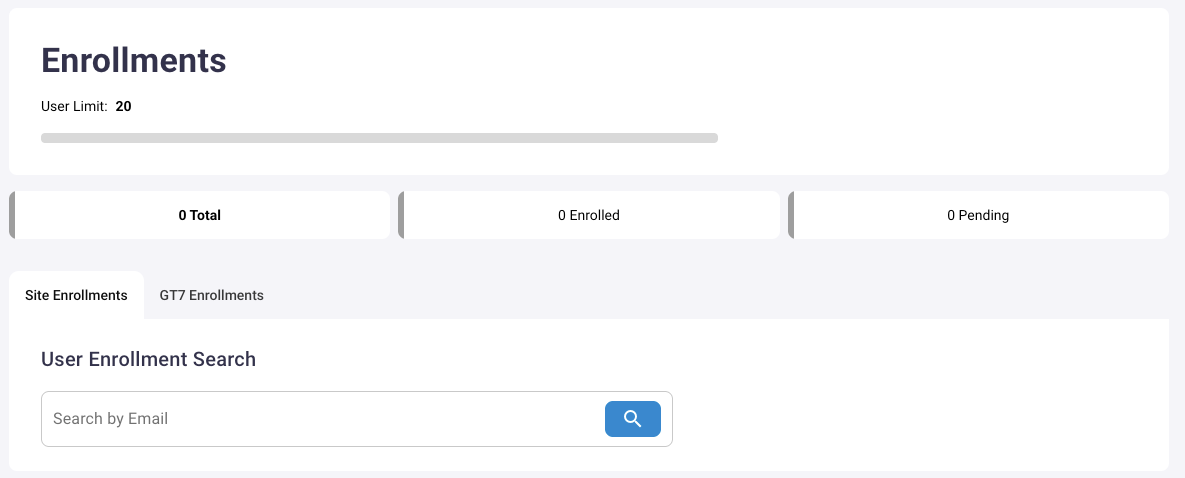
User enrollment search
To check the enrollment of a single user, enter their email address in the Search by Email field of the User Enrollment Search card and press Enter. The result shows an overall status for the user, the Consent Status and the Server Status.
The Server Status summarizes the user's enrollment across all XS4 Face Servers on the site, for example:
- Enrolled on all servers: Every server on the site has enrolled the user.
- Enrolled on 2 out of 3 servers: Only some of the servers on the site have enrolled the user.
- Not enrolled on servers: The user hasn't given consent yet, so no server has enrolled them.
- All servers offline: None of the servers on the site are connected, so the console can't check the user's enrollment.
When one or more servers need attention, a button such as 2 servers need attention appears below the status. Click it to see the servers that haven't enrolled the user. Servers that are offline show (offline) after their name. If the list contains more than 5 servers, use the search field at the top of the list to find a server by name.
Access Logs
The Access Logs for the selected site can be found on the left-hand pane and show details of access attempts from an XS4 Face Device to an XS4 Face Server. Attempts where the device doesn't detect a face aren't logged. No personal details are available through these logs.
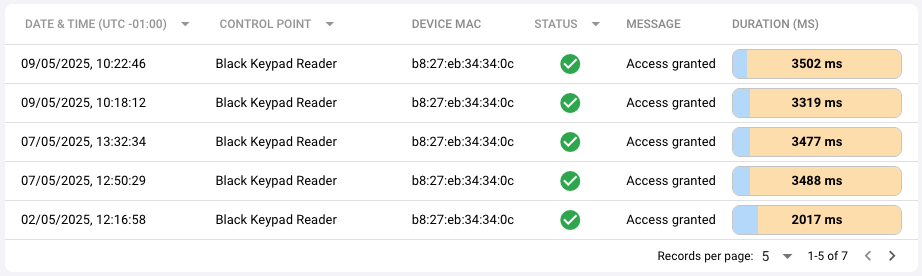
- Date/Time: The date and time the access request was initiated. Filter by date using this button.
- Server Name: The name of the XS4 Face Server that handled this request. Filter by server using this button.
- Control Point: The name of the control point that this request was made to. Filter by control point using this button.
- Device MAC: The MAC address of the XS4 Face Device that made this request.
- Status: The status of the access request. Filter by status using this button.
- Message: A summary of the result of this access request.
- Duration: The time taken for the access request to complete. This includes the time taken for the integration to respond with a result if applicable.
Each time the XS4 Face Device senses a presence, there can be up to 3 access requests shown here.
Tools
The Tools section can be found in the left-hand pane and contains general purpose utilities that can apply to any server or device.
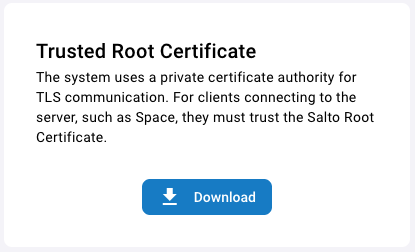
Trusted root certificate
To allow an ACS to trust connections to and from the XS4 Face Server, download the root certificate from this tile. All XS4 Face Servers and XS4 Face Devices use a certificate that is part of this certificate chain to prove their legitimacy. Once downloaded onto the ACS, install the certificate by double clicking it on Windows and Install Certificate….
This step is included in the installation process as standard.
 Back
Organizations